Ponding Long After Rain
- You See
- Water still standing in the field days later, with a dirt ring when it dries.
- What It Means
- The roof has no slope to the drains in that bay. Tapered insulation and crickets give it one during replacement.
Low-Slope Commercial Roofs
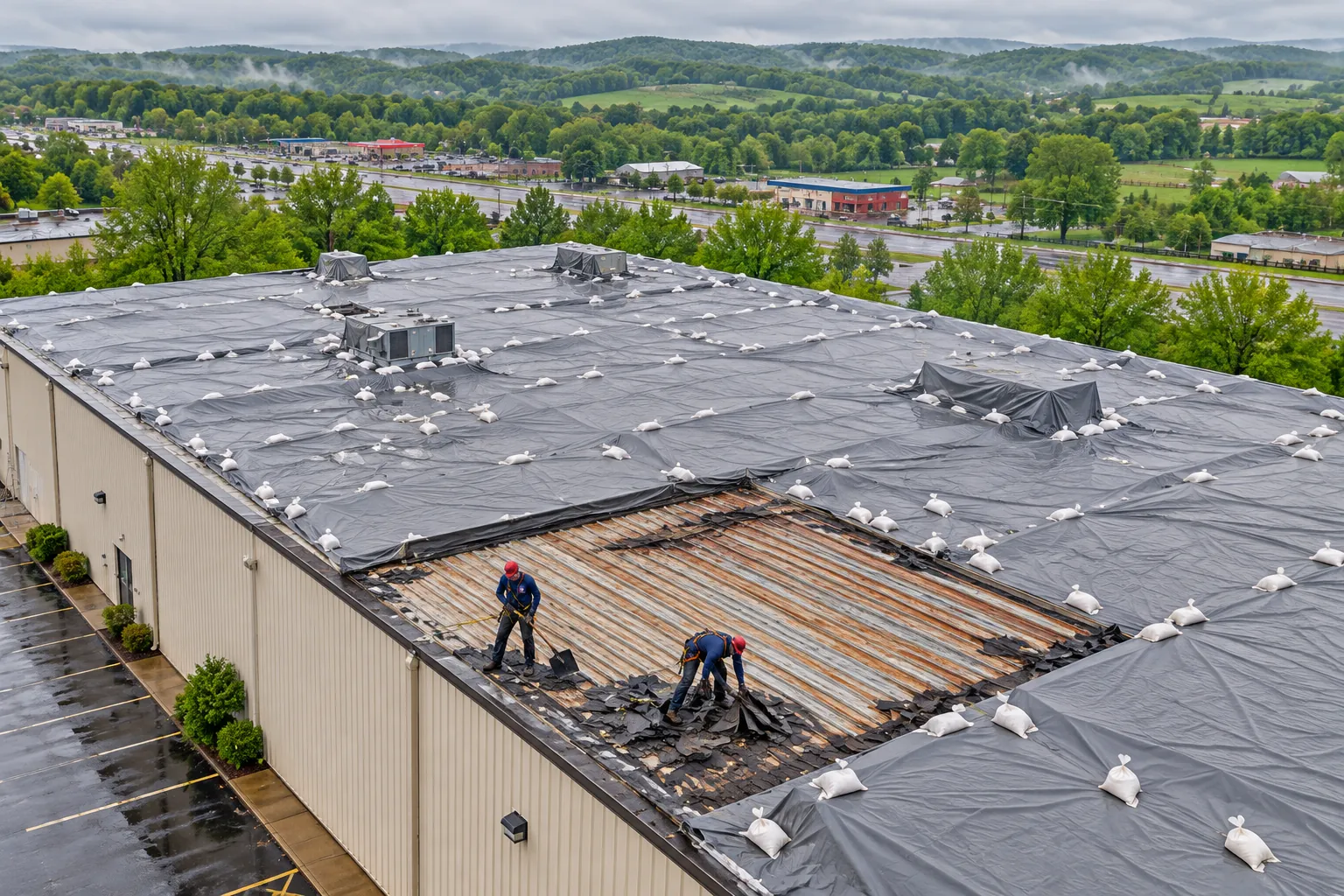
As a Radcliff flat roofing contractor, we replace low-slope roofs with tapered insulation, a cover board, and a single-ply membrane, and rebuild the drains, scuppers, and parapet flashing around them.
A Radcliff flat roofing contractor picks the membrane by what sits on the roof and what vents onto it. All three suit parapet roofs with interior drains.
Flat roofs fail where water stalls. These four conditions show up most on parapet roofs over shops and offices.
Every option below starts with dry insulation sloped to the drains, then changes what goes on top.
Insulation boards cut to slope carry water to each drain and scupper, with crickets behind curbs and sumps at the drain bowls.
Tenant spaces stay open while tear-off runs in sections, with entrances taped off under the work edge and intakes covered.
Kitchen exhaust drops grease on the roof. PVC resists animal fats, and grease boxes catch the drip at each fan.
With one dry existing roof and a solid deck, a cover board and new membrane go over it, and edge metal rises to match.
The left column is a tired flat roof. The right column is the same roof after replacement.
Ponding pushes water against every seam in that bay. A walk with core cuts shows whether slope can be added during a recover or needs a tear-off.
Flat roof ponding repair and full replacement both run in this order, with each day's section dried in before the crew leaves.
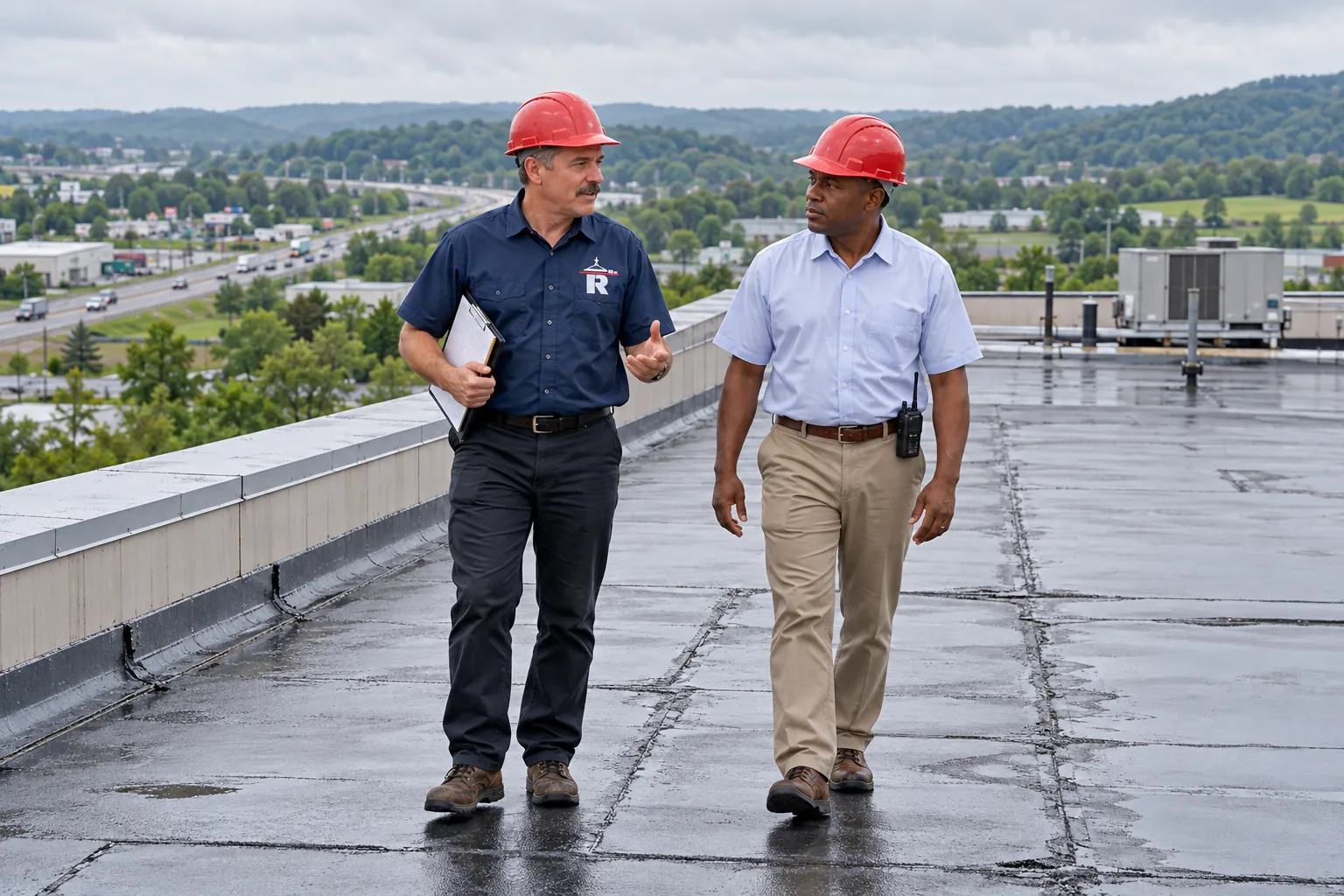
We mark ponding bays, check every drain and scupper, pull at parapet flashing, and take core cuts where the membrane feels soft.
Tapered insulation, crickets, sumps, and any overflow scuppers get laid out so water has a path off every bay.
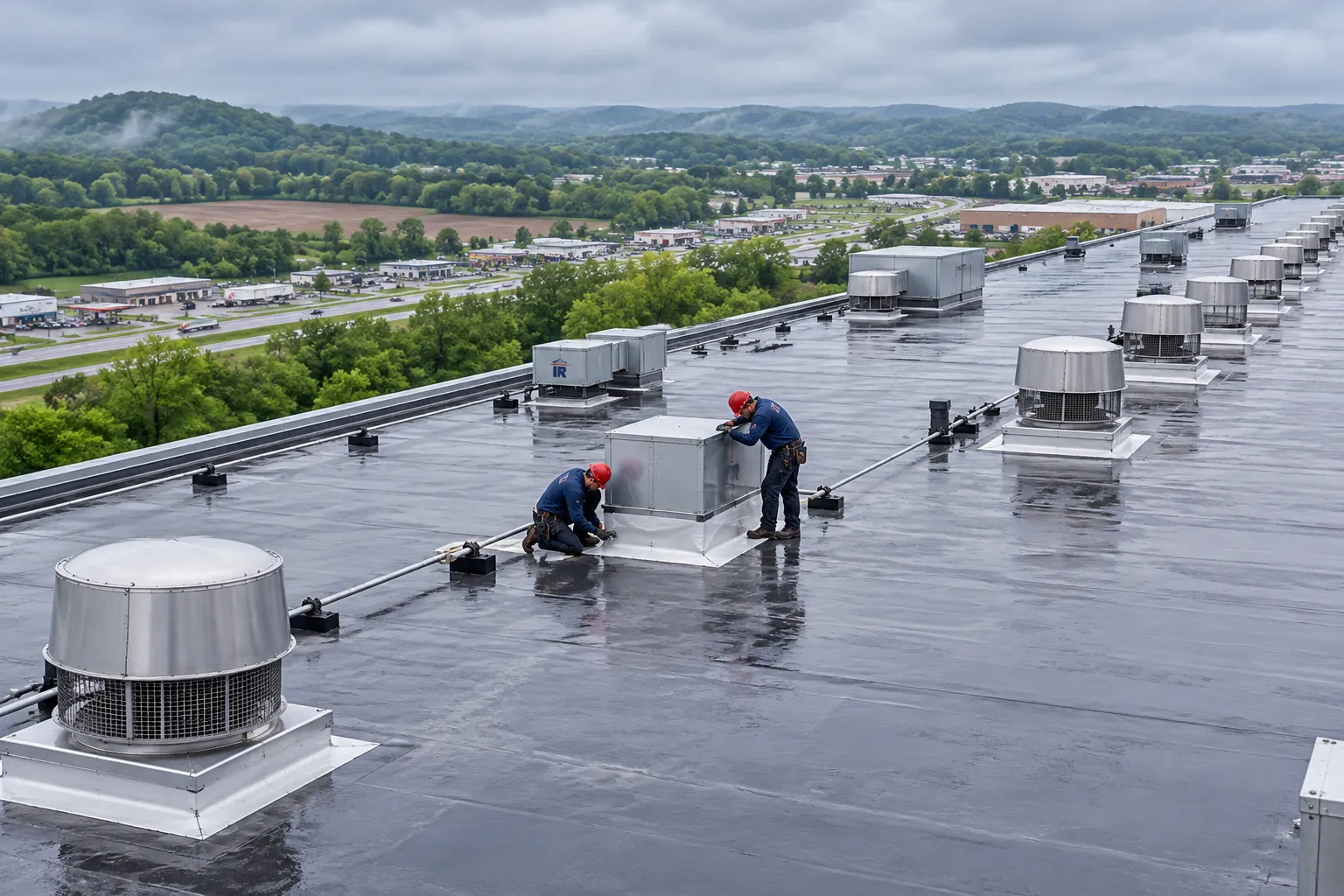
Old roofing comes off only as far as the crew can dry in, and a sealed tie-in joins new roof to old each evening.
Insulation, cover board, and membrane go down, then flashing at curbs and parapets, new drain rings, and edge metal finish it.
The membrane on top of a flat roof has its own page, and so does fixing a single leak.
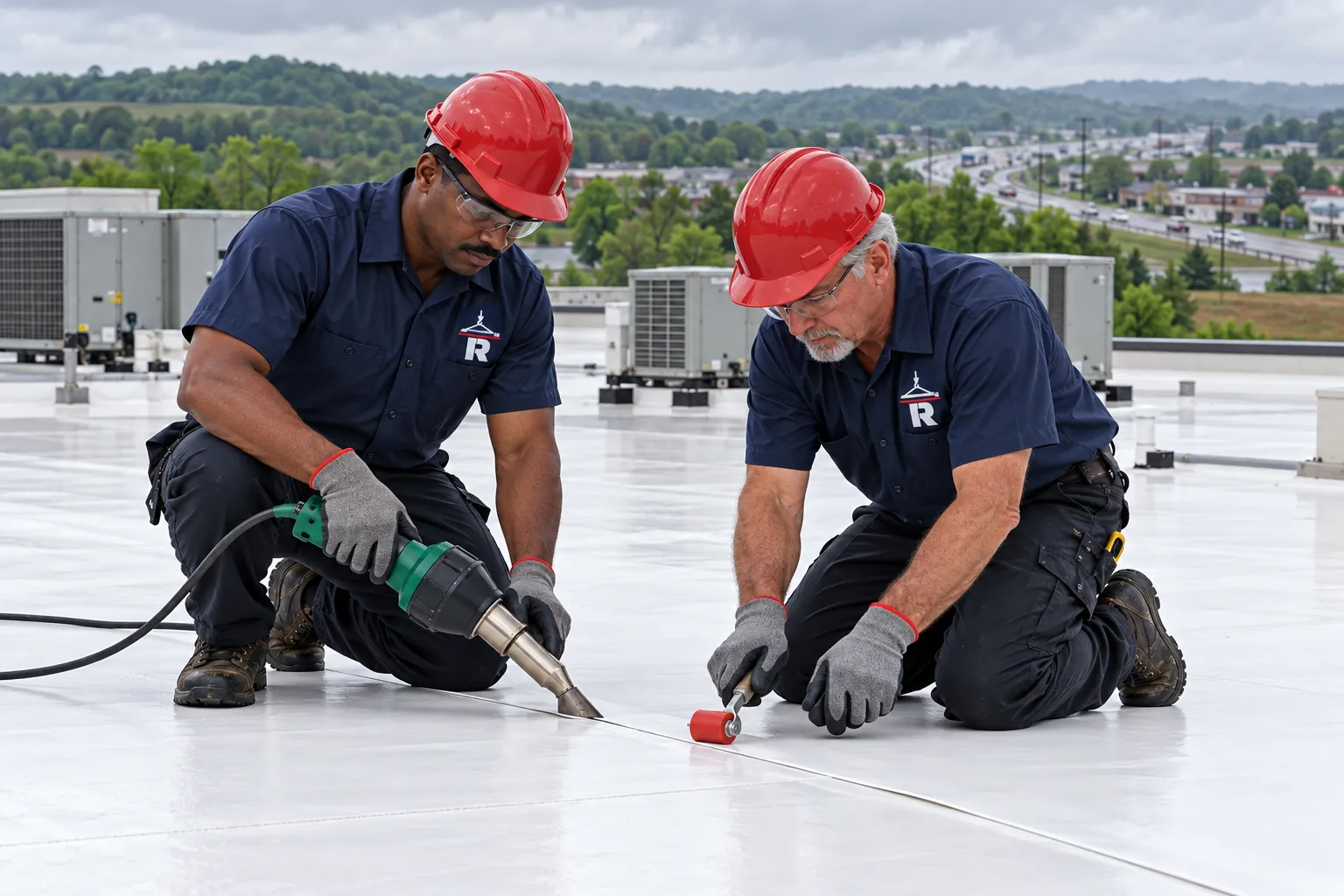
Welded white sheets are the usual top layer on open retail and office roofs around Radcliff.
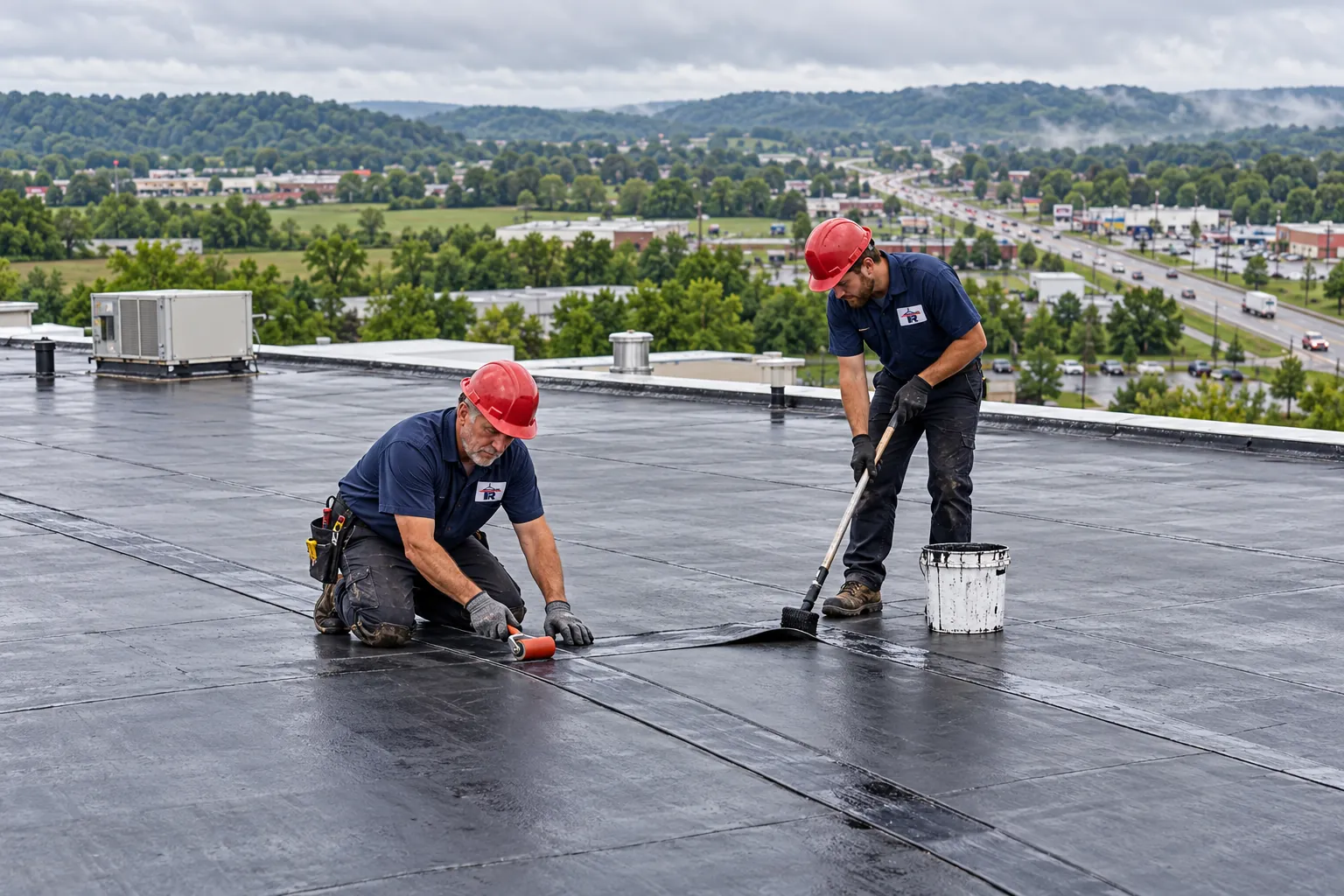
Rubber sheets suit older flat roofs and cold rooms, joined with seam tape rather than heat.
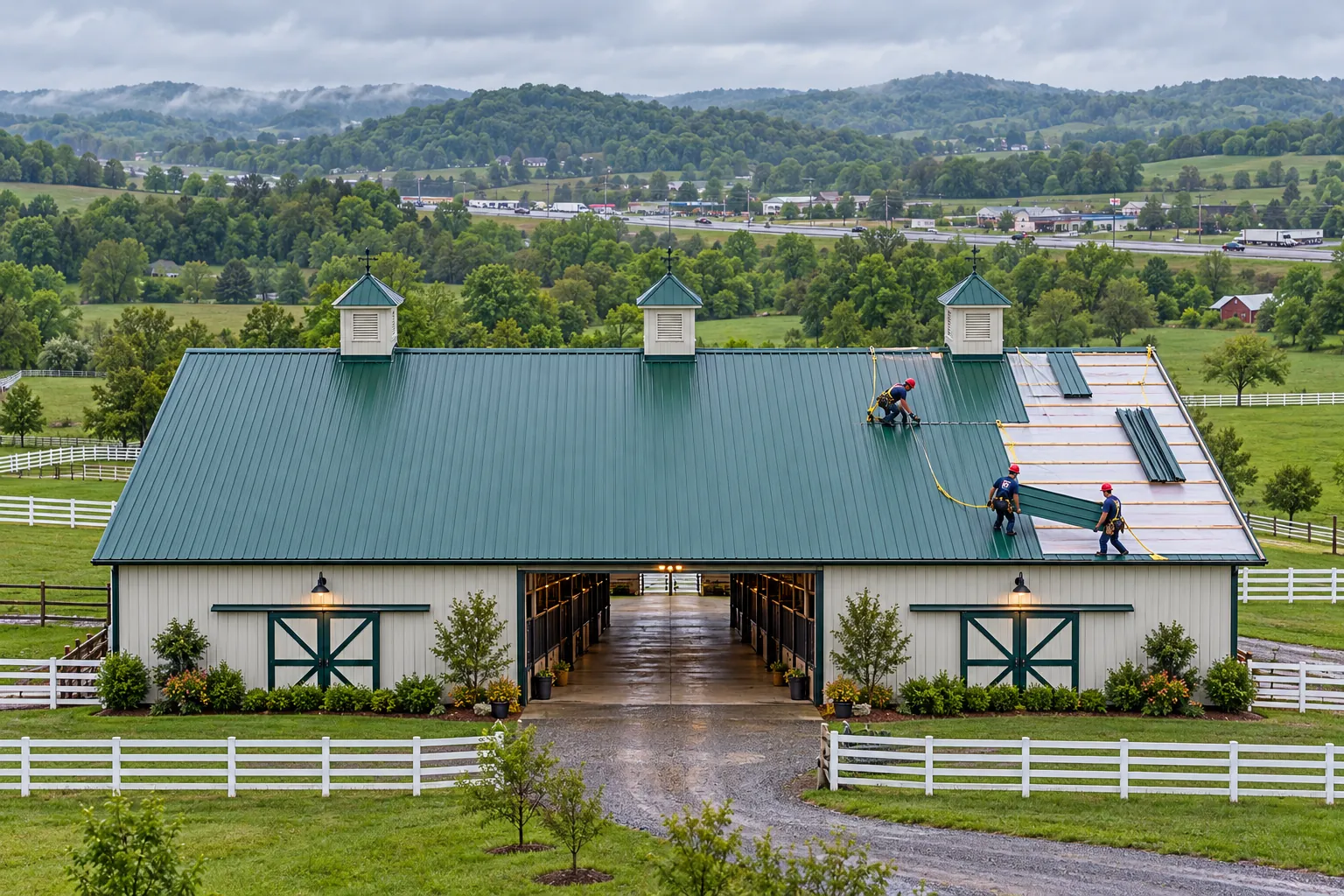
Retrofit framing can turn a flat roof with chronic ponding into a sloped metal roof.
Answers on ponding, drains, recovers, and keeping tenants open.
Slope gets built into the roof. During a recover or tear-off, tapered insulation carries water toward the drains, crickets push it around curbs, and sumps drop it into each drain bowl. Clearing a clogged drain fixes ponding caused by debris, but a sagging steel deck between bays needs new slope in the insulation above it.
They are. New insulation raises the roof, so scuppers get raised and relined, conductor heads and downspouts are checked for size, and overflow scuppers or secondary drains go through the parapet where a bay has only one way out. Interior drain piping changes bring in plumbing review.
Over one dry existing roof with a solid deck, yes. Core cuts or a moisture scan find wet insulation, which gets cut out first. A cover board goes over the old surface, loose flashing comes off, and edge metal and scuppers rise to the new height. Two existing roofs or rusted deck mean a tear-off.
Most stay open. Tear-off runs in sections dried in each day, entrances under the work edge get taped off, and air intakes near adhesive or tear-off get covered. Low-odor adhesives or mechanically attached systems suit occupied stores, offices, and clinics because they cut the fumes drawn into rooftop units.
Kitchen exhaust fans drop oils and animal fats on the roof, and some membranes break down under them. PVC holds up well to grease, TPO handles moderate exposure, and EPDM swells on contact. Grease containment boxes at each fan and a sacrificial sheet under the drip keep the field membrane clean.
Send us where the water stands and where it shows inside. We will walk the roof, test the insulation, and plan the slope.
Leave a name and number and we will call you back, or call us now at (364) 205-6782.