Commercial Roof Repair
Leaks traced to the seam, drain, curb, or lap letting water in, then repaired with matching material.
- Best for: one or two leak spots over dry insulation
- Look elsewhere: wet insulation across large sections
Six Services, One Roof Walk
We offer commercial roofing services in Radcliff for every common roof on a business building: repairs, new single-ply membranes, plant roofs, and metal panels.
Each of our commercial roofing services in Radcliff fits a different roof. The fit lines show where each one belongs and where it does not.
Leaks traced to the seam, drain, curb, or lap letting water in, then repaired with matching material.
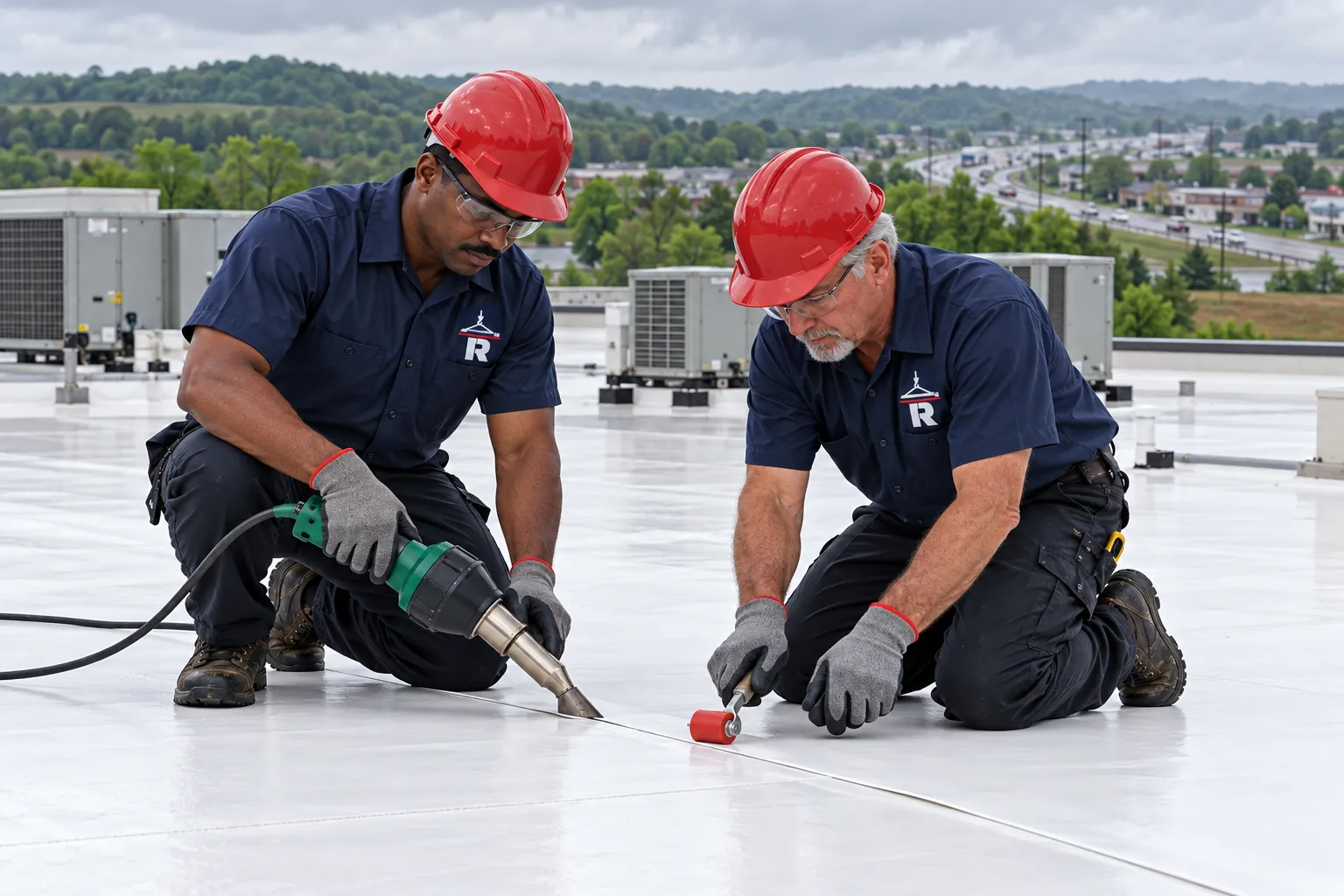
White thermoplastic sheets with hot-air welded seams on flat and low-slope roofs.
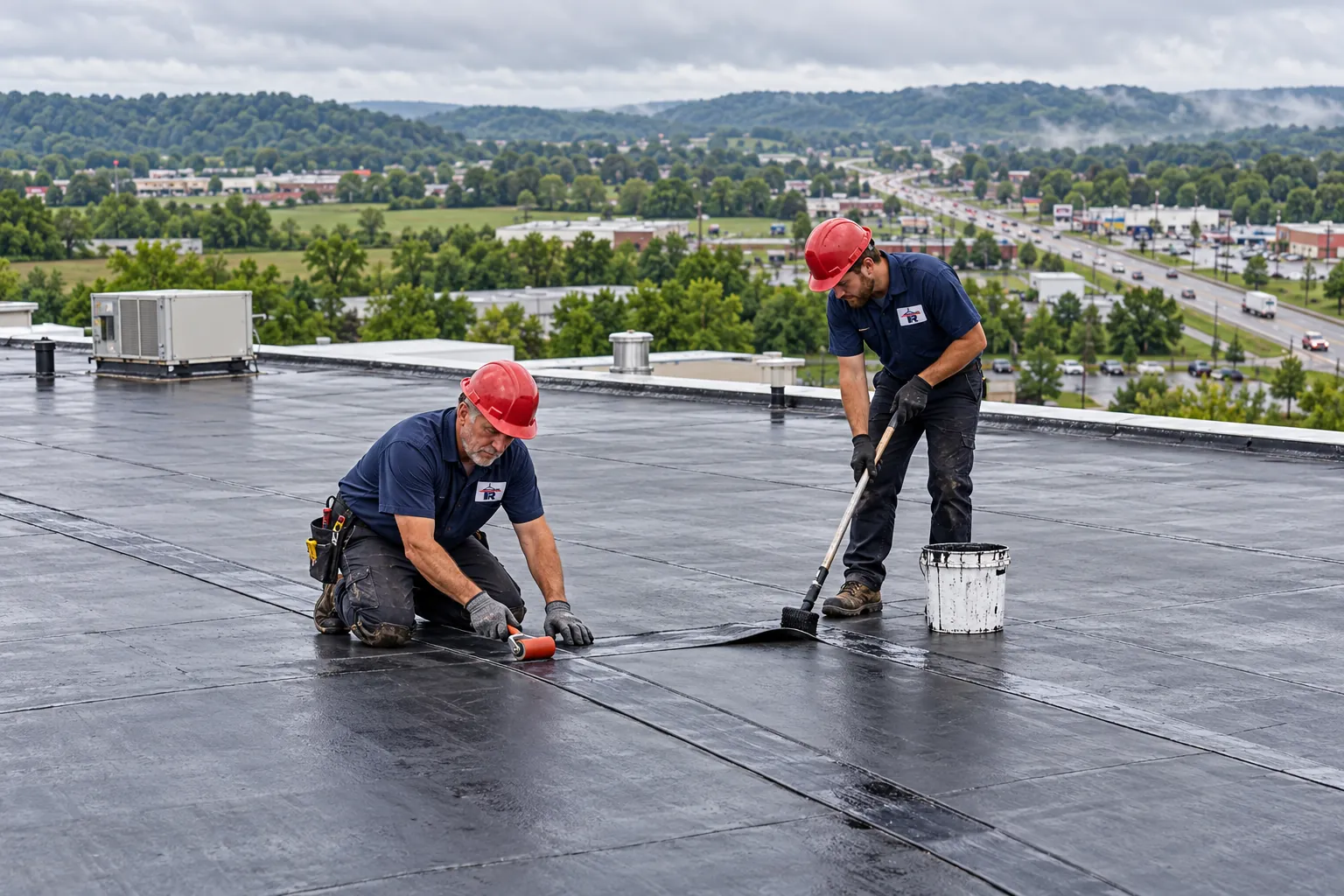
Synthetic rubber in large sheets, joined with primer and seam tape and flexible through freeze-thaw.
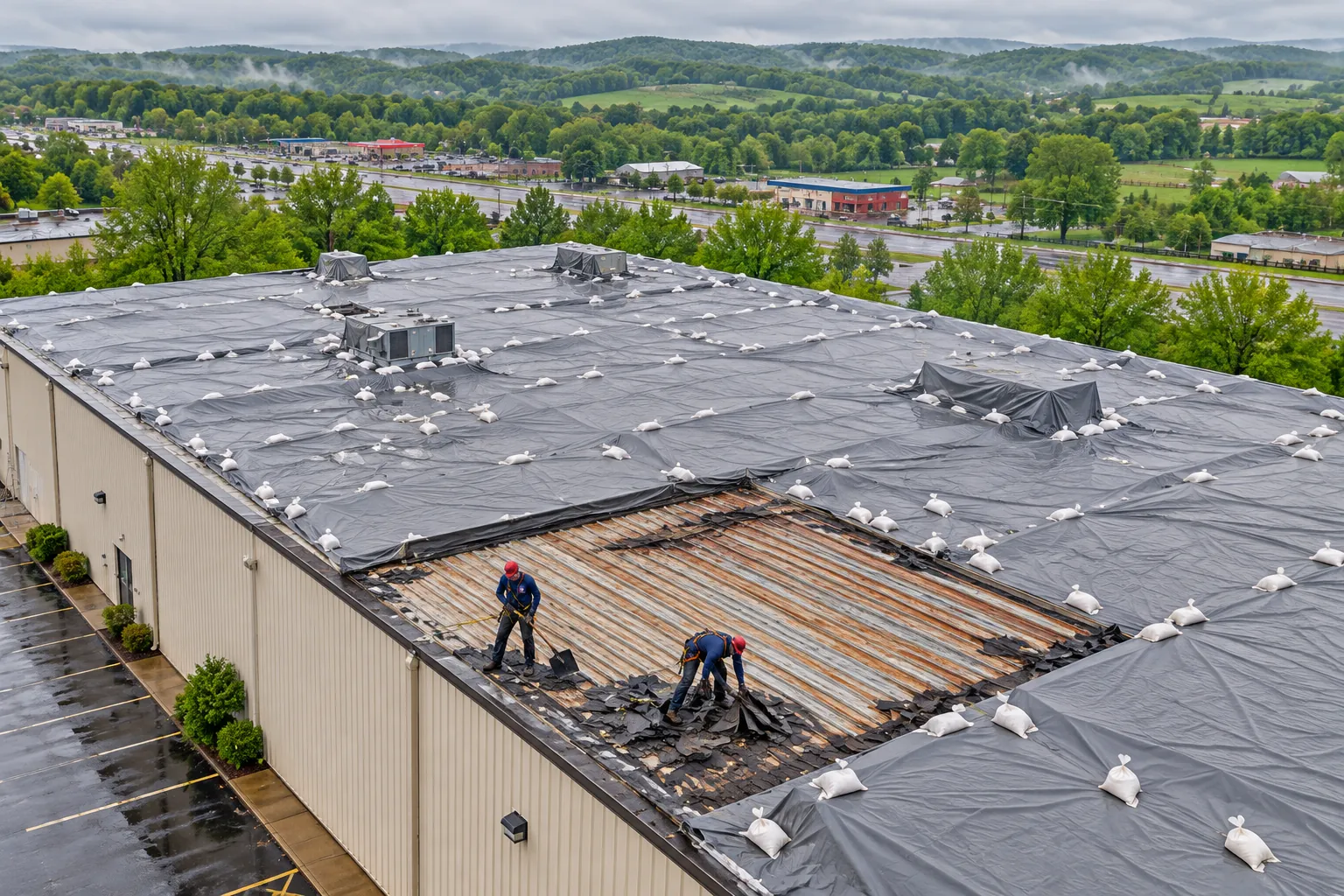
Parapet roofs rebuilt with tapered insulation, cover board, membrane, and new drains and scuppers.
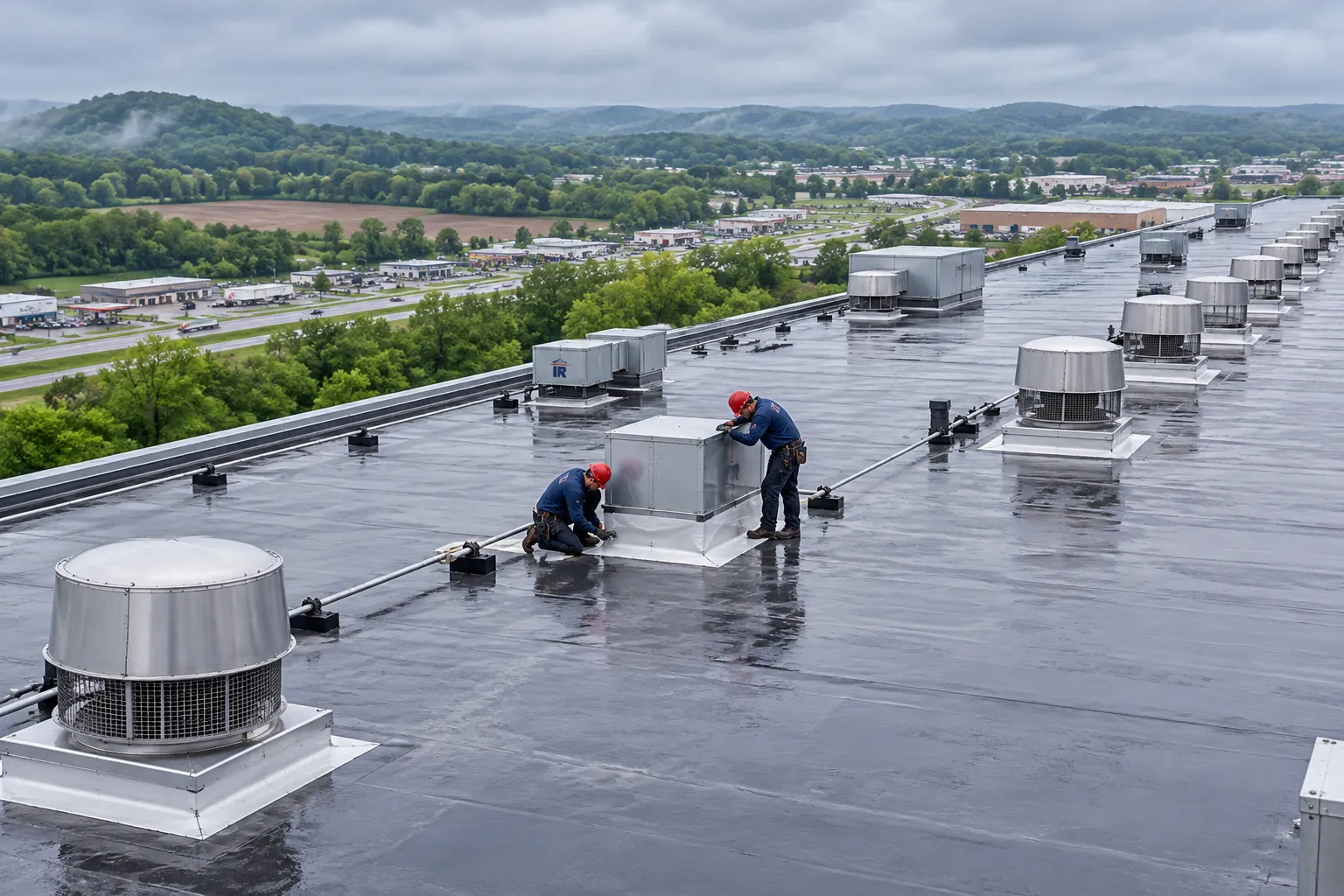
Plant roofs replaced in sections around shifts, with resistant sheets at exhaust and raised curbs.
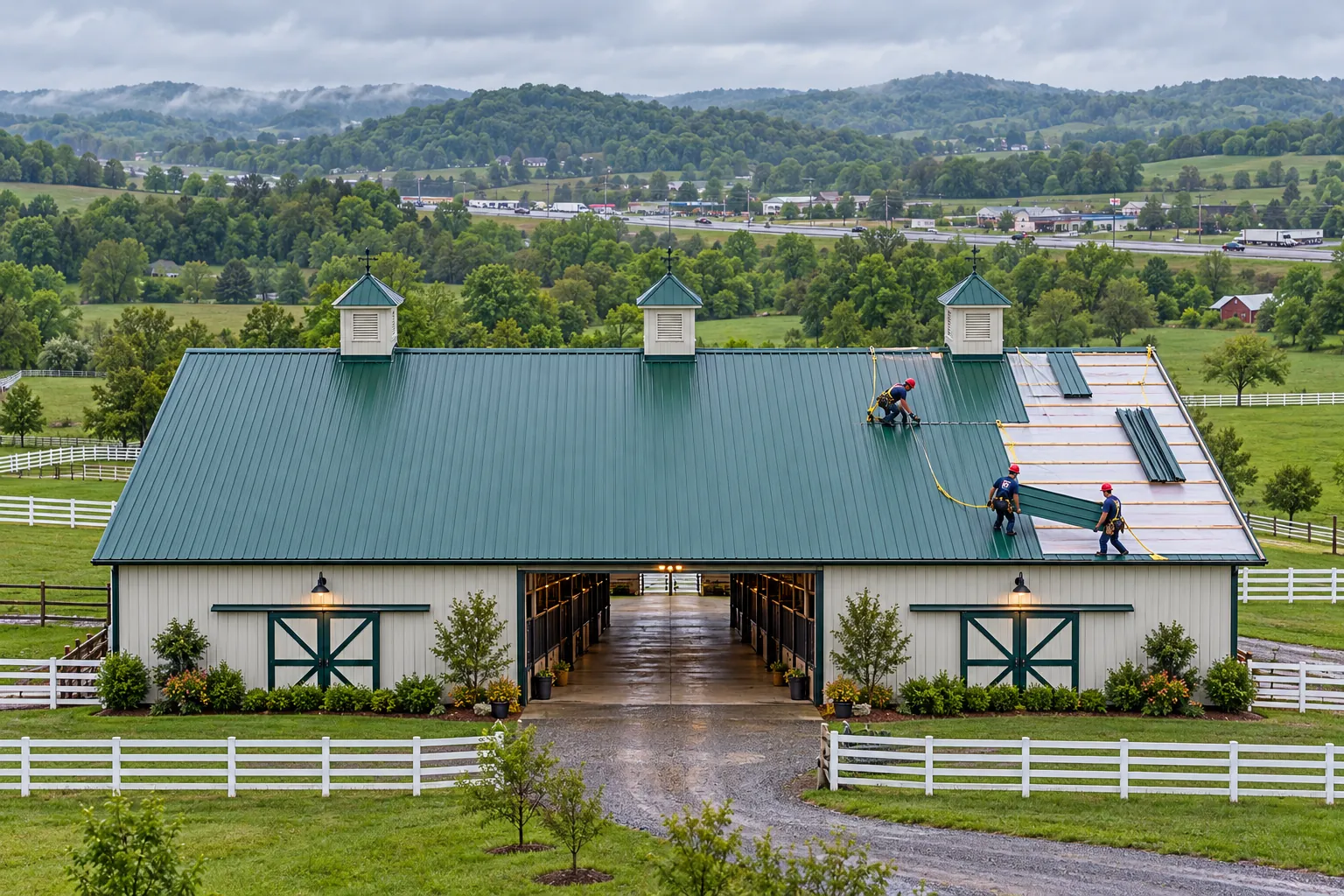
Standing seam or R-panel installs, retrofit metal over flat roofs, and fastener and lap repairs.
Roof slope sets the first boundary. Single-ply sheets are made for flat and low-slope roofs, and metal panels need enough pitch to shed water past their laps.
When the same seams leak after every repair, wet insulation is usually spreading below. Core cuts show whether to recover or tear off.
From inspection to installation, every project runs in the same order on every roof.
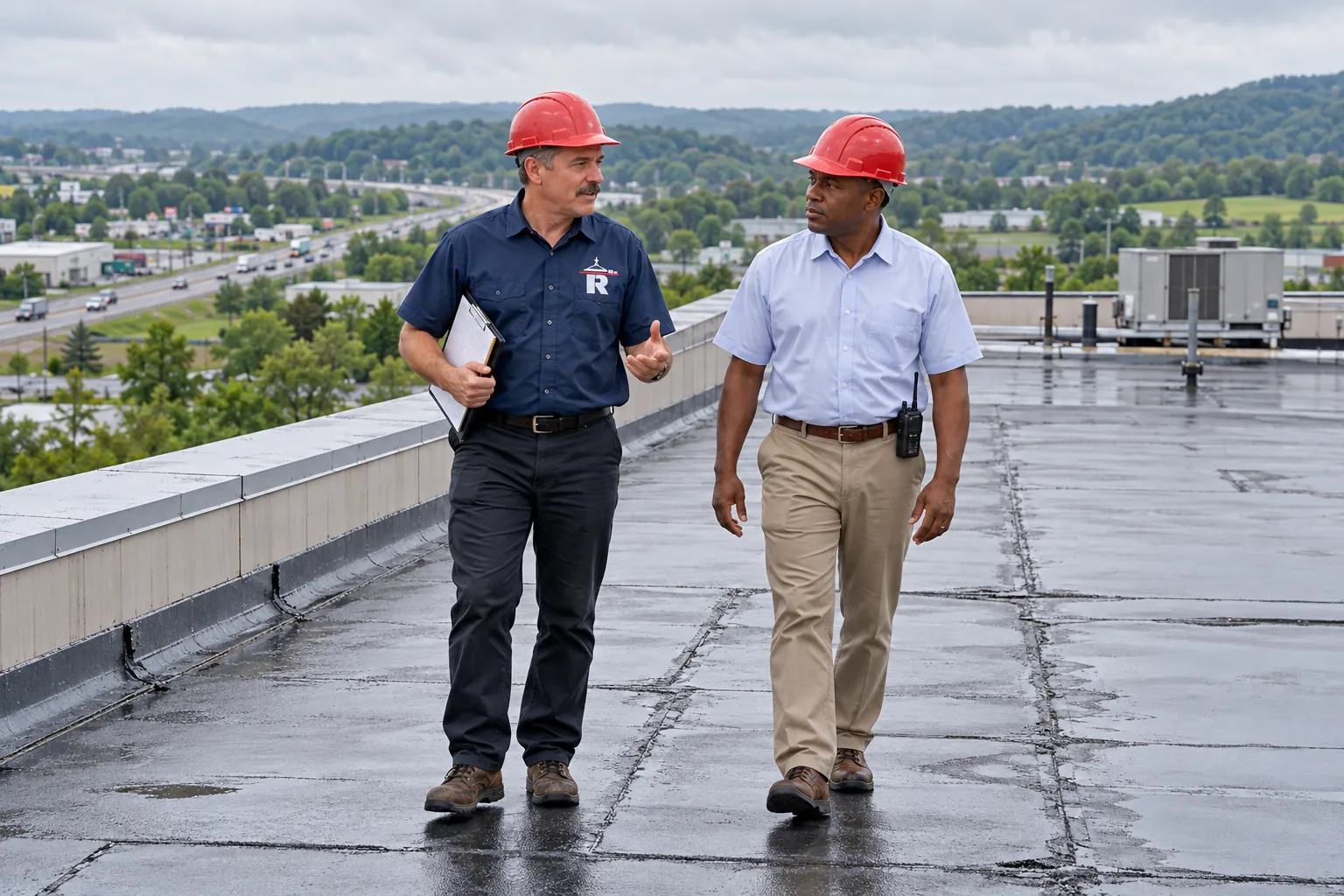
A full walk with core cuts and moisture readings, checking membrane or panels, seams, curb and parapet flashing, drains, scuppers, and edge metal.
Deck type and building use settle the membrane or panel and whether it is fastened, adhered, or set on clips.
The city or county inspector confirms the permit, then membrane, insulation, edge metal, and flashing get ordered for the job.
Daily sections come off and go back on with insulation, cover board, membrane, and flashing before the crew leaves.
You walk the finished roof with us, checking seams, drains, and edge metal one by one.
Answers on commercial roof replacement in Radcliff, KY, membrane choice, slope, and cost.
When wet insulation, deck damage, or failing seams cover too much of the roof for repairs to hold.
Watch for soft areas across large sections, membrane shrinking off parapets, rust holes in the deck seen from inside, patches on patches, and metal rusted through on many runs. A moisture scan measures how much insulation is wet.
Tear-off clears the roof to the deck, keeps the edge near its current height, and shows the whole deck.
A recover sets the new system over one dry existing roof, keeps dry insulation, and raises edge metal and scuppers. Wet insulation, two existing roofs, or rusted deck lead to tear-off, and the building official confirms code limits.
Drain bowls get new clamping rings and extensions when the roof rises, scuppers are raised and relined, and edge metal and coping caps are replaced to fit the new height. Gutters are resized when the roof area draining to them changes, and tapered crickets and sumps correct the ponding the old roof had.
Units are disconnected and lifted, or left on raised curbs, so the new membrane runs under and up each curb in one piece. Curbs too short for the new roof height get extended, gas and condensate lines move onto pipe supports, and abandoned units come off. An HVAC contractor handles disconnects under its own inspection.
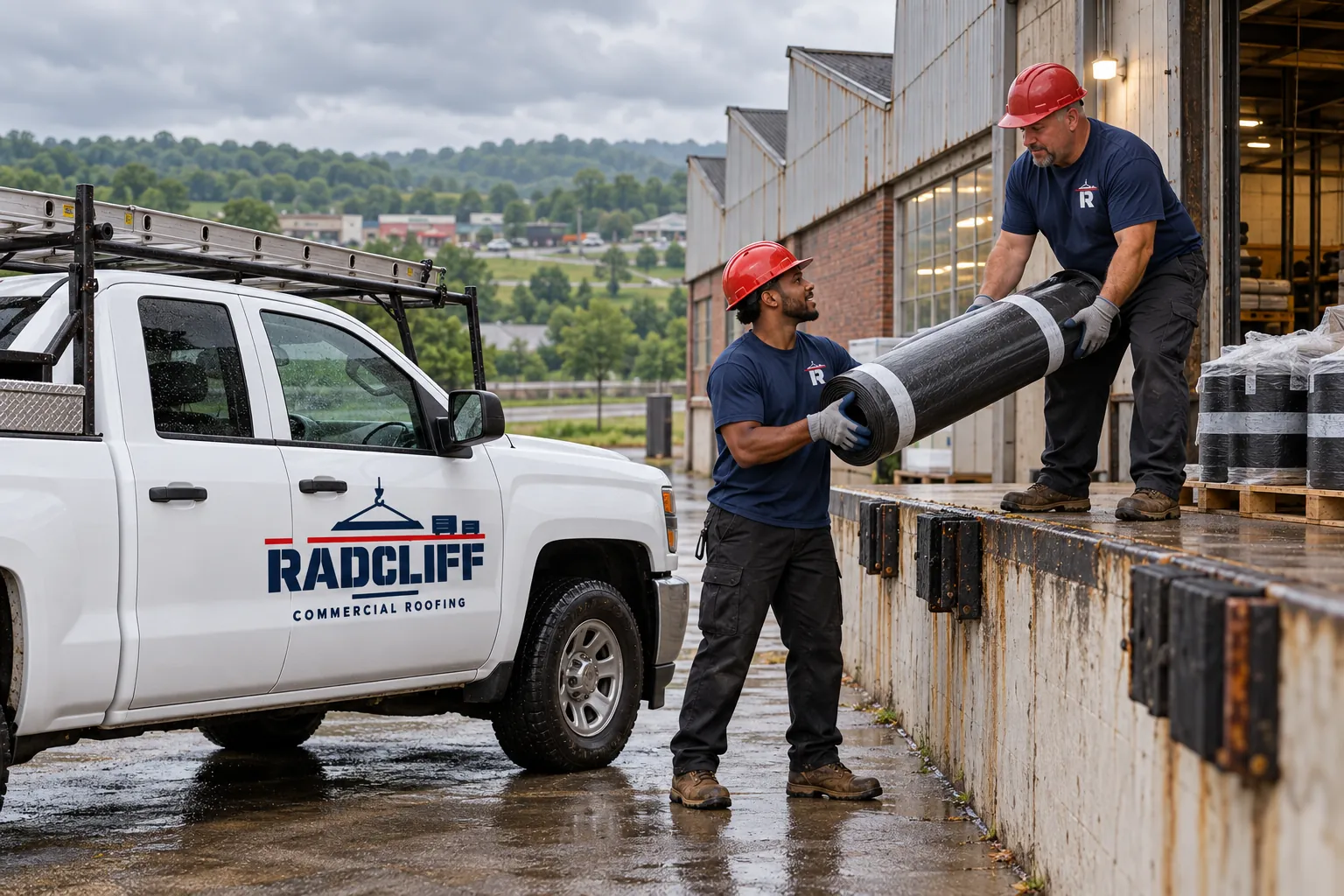
Most do. Keeping a business open during reroofing works because tear-off runs in sections dried in each day. Entrances under the work edge get fenced, air intakes near adhesive get covered, inventory under open deck gets tarped, and crane and dumpster spots are set ahead. Noise, odor, and overhead work are the main effects inside.
TPO, EPDM, and PVC cover most flat roofs. TPO and PVC weld at the seams and stay white; EPDM is taped and usually black.
PVC resists oils and fats best, which suits restaurants and plants with exhaust. The roof walk settles it, based on what sits on the roof, what vents onto it, and how water reaches the drains.
Single-ply membranes are made for flat and low-slope roofs, and metal panels need enough pitch to shed water past their laps. Standing seam handles lower slopes than R-panel because its seams sit above the water. Panel makers publish a minimum slope for each profile, and the installer checks it at every roof plane.
Roof size, system type, tear-off scope, and flashing detail drive it most.
Square footage and roof levels, layers to remove and haul, wet insulation found by core cuts, insulation thickness, the count of curbs, pipes, drains, and skylights, edge metal and gutter length, and crane access all count. Metal roofs add panel profile, trim, and any framing.
Tell us the roof type, its age, and where it leaks. We will walk it and recommend the service that fits.
Leave a name and number and we will call you back, or call us now at (364) 205-6782.