
Hot Black Roof Over Cooled Space
- You See
- A dark membrane above offices or retail that stays hot to the touch all summer.
- What It Means
- A white TPO surface reflects much of that sunlight, which helps buildings running air conditioning under the roof.
Single-Ply TPO Roofs
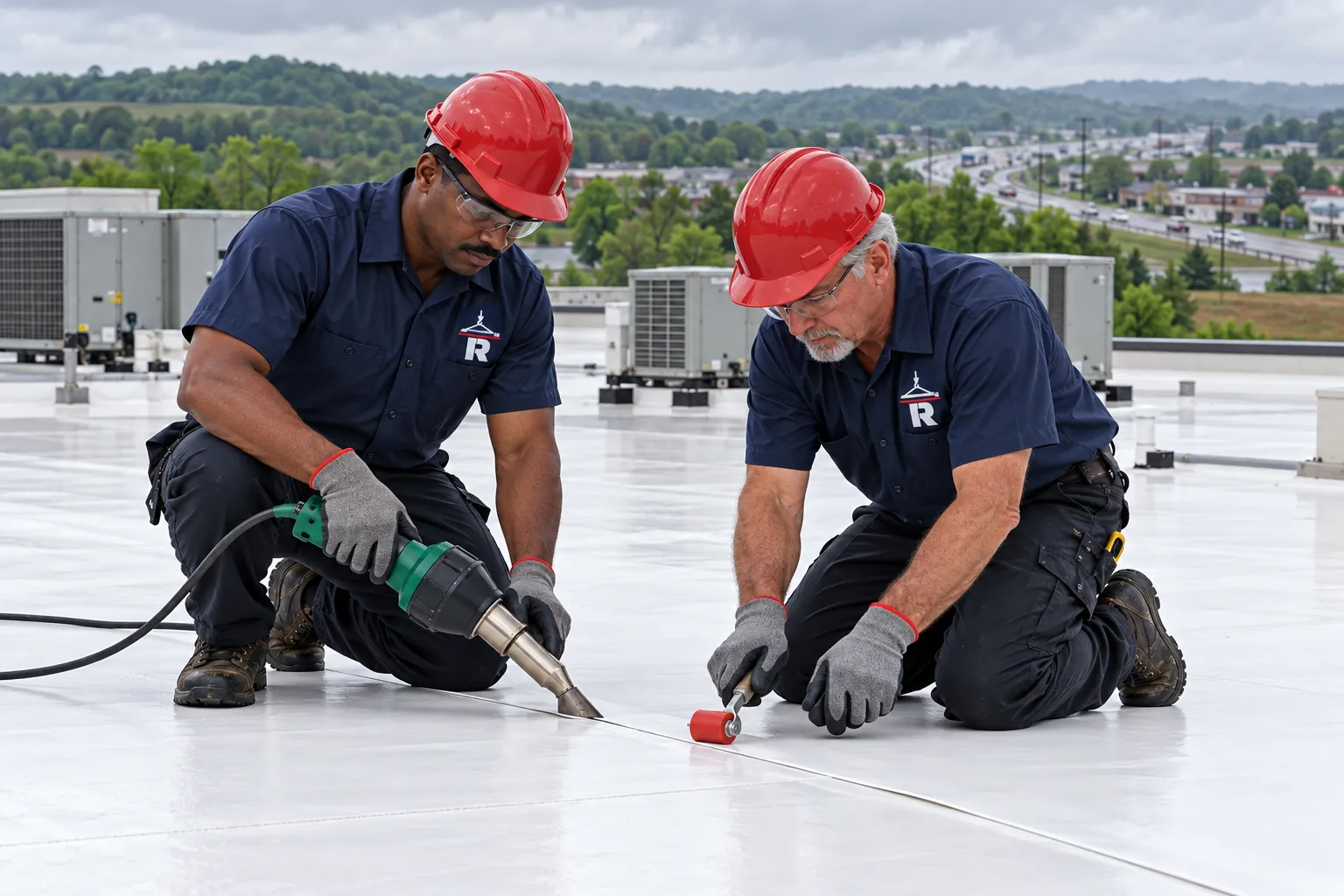
As a Radcliff TPO roofing contractor, we install white TPO membrane on flat and low-slope commercial roofs, welding every seam and flashing each curb, drain, and wall.
A Radcliff TPO roofing contractor starts by comparing TPO with the two other single-ply sheets on the same roof. The raised column is TPO.
These conditions on an existing flat roof often point toward new TPO, either over the old roof or after a tear-off.
Deck type, wind exposure, and the existing roof decide which of these TPO installs fits your building.
Plates and screws in the seam laps hold the sheet to steel decks on warehouses and large open roofs. It is the usual answer to mechanically attached vs fully adhered TPO on a big, simple field.
Bonding adhesive runs across the whole sheet. Odd roof shapes, wind-exposed edges, and buildings where a quiet finish matters suit this method.
Steel plates screwed to the deck are heated from above and fused to the sheet underside, which cuts the number of fasteners needed in the seam laps.
A TPO recover over an existing flat roof works when the old membrane and insulation are dry. Wet boards found by core cuts get cut out first, then a cover board goes down.
Owners list the left column before the work. The right column is the same roof with new TPO on it.
Open laps let water travel under the sheet before it shows inside. A roof walk shows whether the field can be saved or needs new TPO.
TPO roof installation in Radcliff, KY follows this order on every building, from the first walk to the last probed seam.
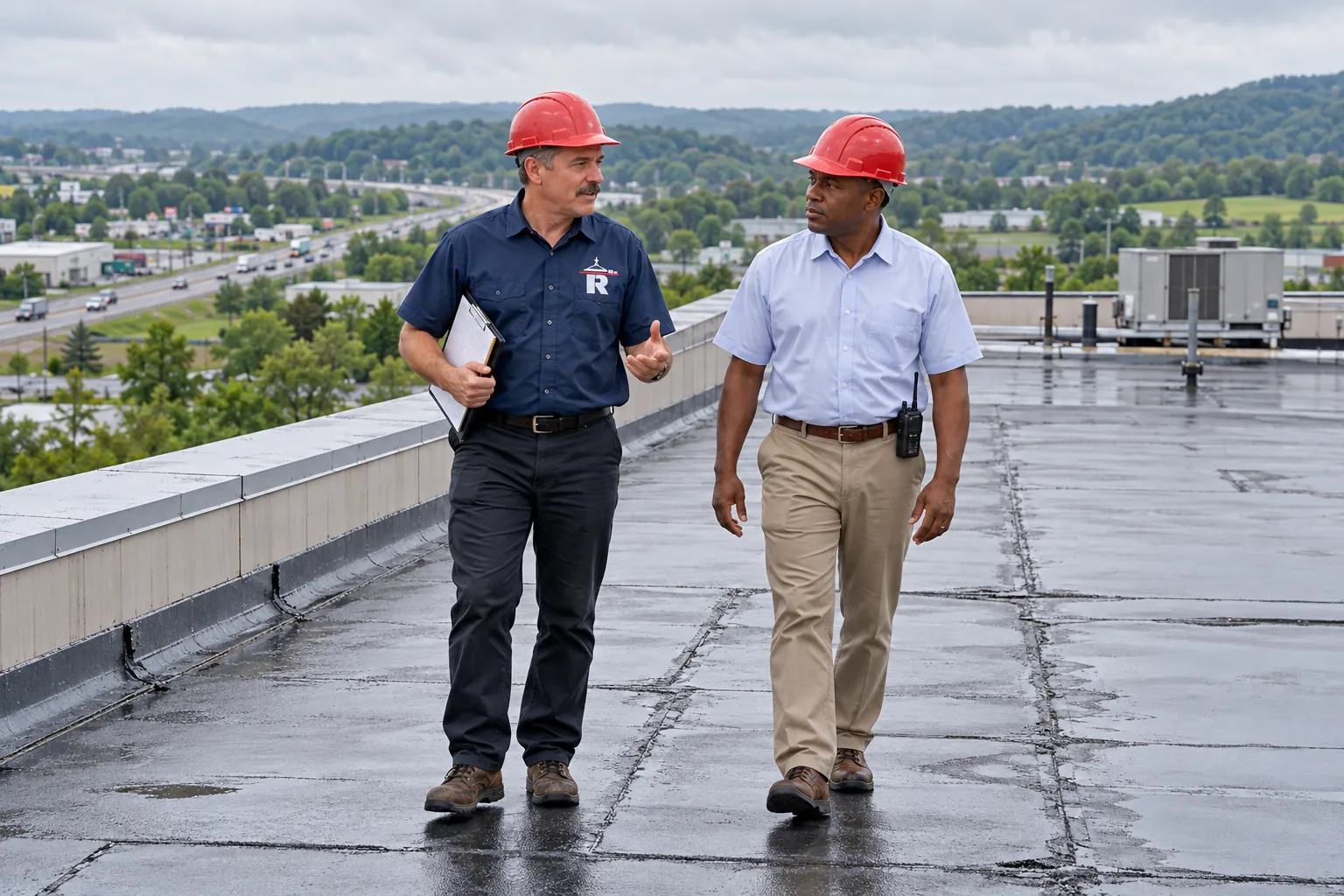
Crews walk the field, probe the old laps, and take core cuts or a moisture scan to find wet insulation before any choice between recover and tear-off.
Wet boards come out, loose curb flashing comes off, and a cover board or tapered insulation goes down so water runs toward drains and scuppers.
How TPO roof seams are welded: laps get cleaned, a test weld is pulled apart by hand to set heat and speed, then the walk-behind welder runs the lap.
Curbs, walls, drains, and pipes get welded flashing, T-joints get patches, and a blunt pick probes every seam edge for gaps along its full length.
Some roofs fit TPO better than others. These pages cover the systems owners most often compare with it.
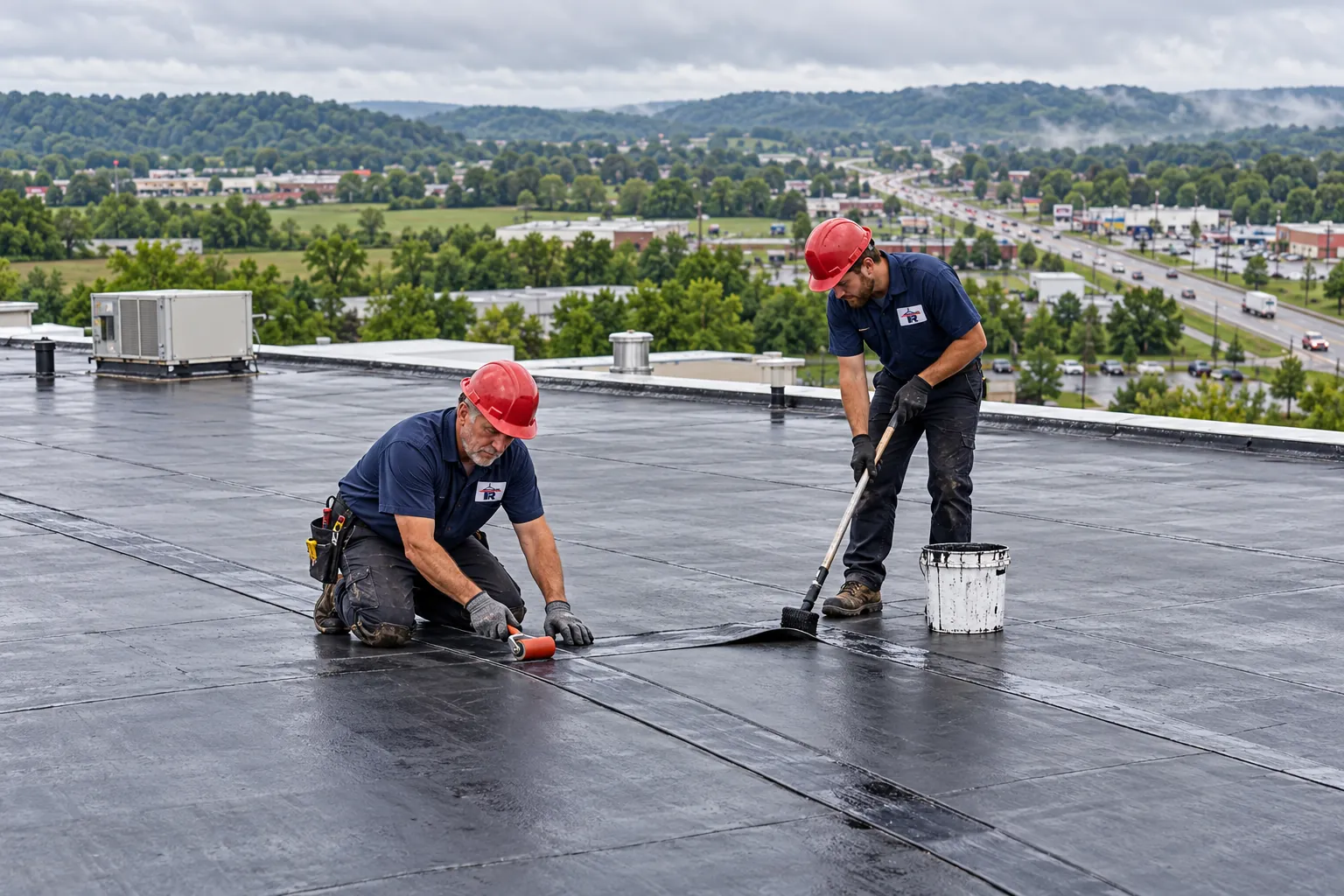
Black rubber sheets with taped seams suit wide flat roofs and cold rooms where a dark surface helps snow clear.
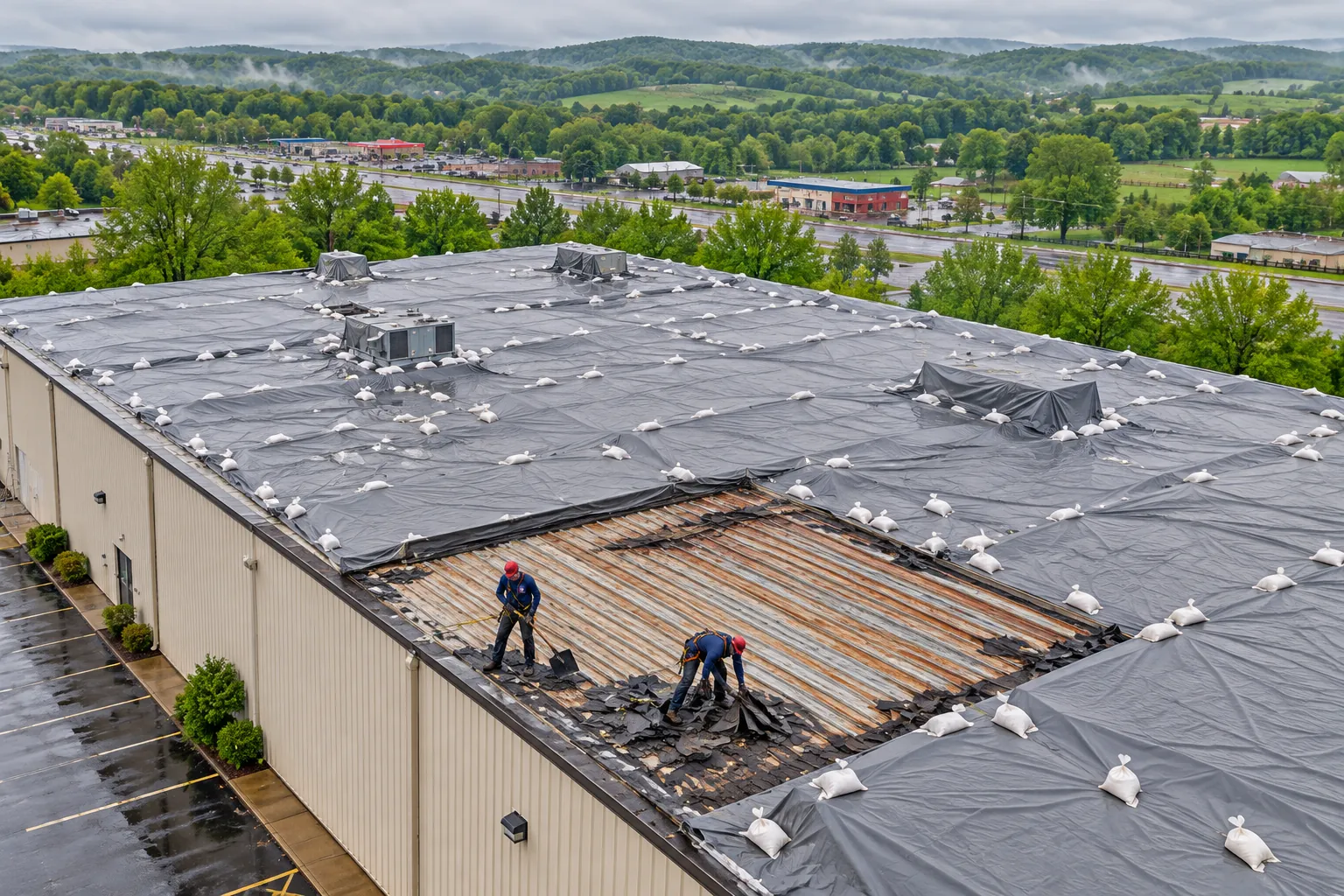
Parapet roofs that pond between drains need tapered insulation planned with the membrane, whichever sheet goes on top.
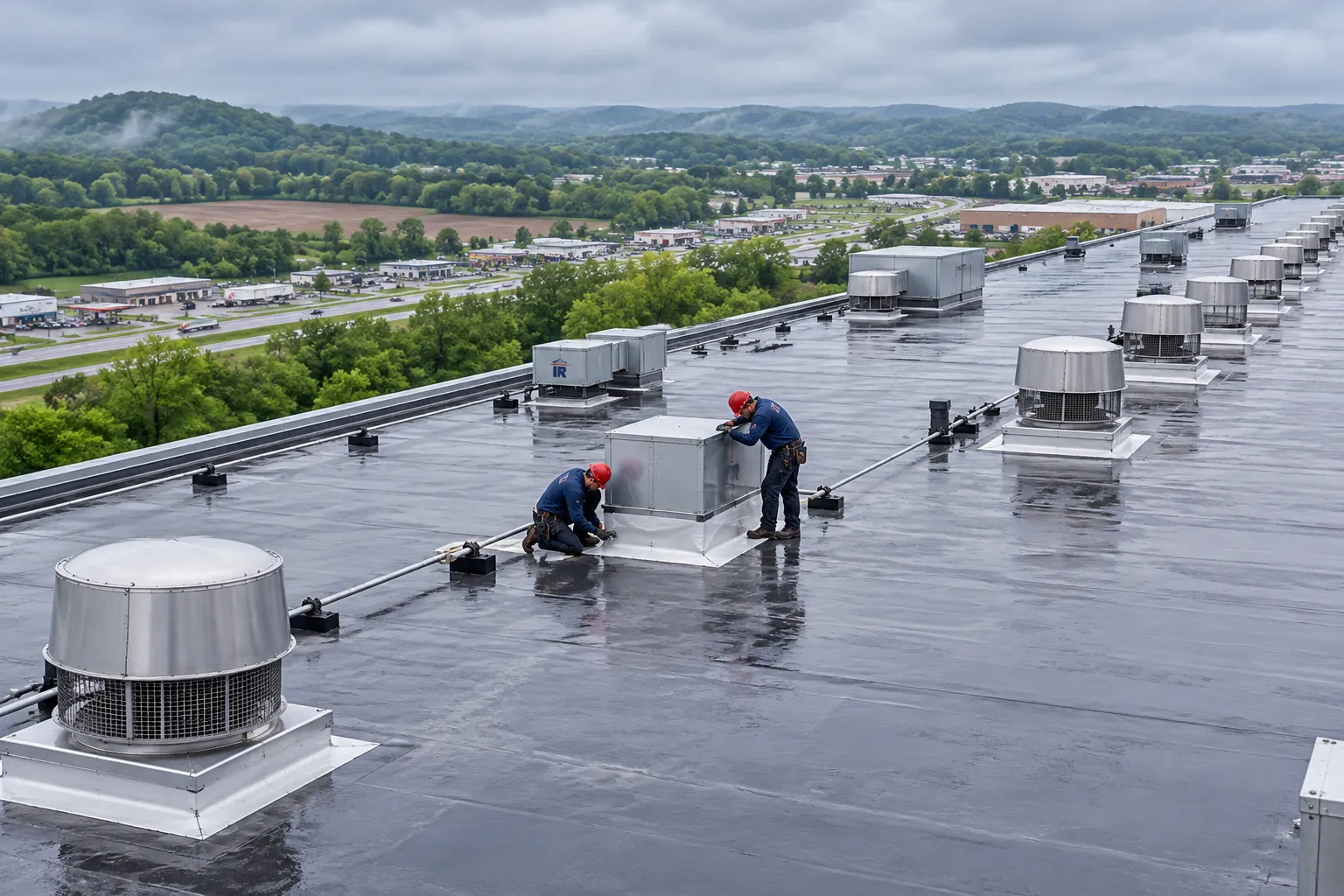
Plant roofs with grease or chemical exhaust often pair TPO in the field with a resistant sheet around the fan curbs.
Answers on where TPO fits, how it attaches, and the details that keep it dry.
TPO is a white thermoplastic sheet laid in wide rolls on flat and low-slope roofs, with seams fused by hot air so each lap becomes part of the sheet.
It suits warehouses, distribution buildings, retail strips, offices, and schools with open roof areas and modest equipment. Restaurants and plants venting grease often get PVC or a protection layer around those fans.
Yes, over one existing roof whose membrane and insulation are dry and whose deck still holds fasteners. Wet insulation found by core cuts gets replaced, a cover board goes down, and loose curb flashing comes off first.
Two roofs already in place or a damaged deck push the job to tear-off, and the local building official has the final word.
Three ways: plates and screws in the laps, full adhesive across the sheet, or induction-welded plates heated through the membrane. Deck type, wind exposure, and building use pick the method. Fastener rows run closer together along parapets and edge metal than in the field, because wind pulls hardest at the corners and perimeter.
A walk-behind hot-air welder runs the field laps, and a hand welder handles corners, curbs, and flashing. Each lap is cleaned first, and a test weld is pulled apart to set heat and speed.
Crews repeat test welds as the roof warms through the day, then probe every seam edge with a blunt pick and patch each T-joint.
Flashing at penetrations, since that is where most TPO roofs leak. Rooftop unit curbs get membrane welded to the field and capped with pre-formed corners. Parapets are flashed up the face under coping or counterflashing, drains clamp the sheet under the ring over a tapered sump, and pipes get pre-molded boots with stainless clamps.
Send us the roof size and what sits on it. We will walk the roof, check the insulation, and tell you whether TPO fits.
Leave a name and number and we will call you back, or call us now at (364) 205-6782.